Sweepstakes Casinos Adjust Operations Amid 2026 State Bans

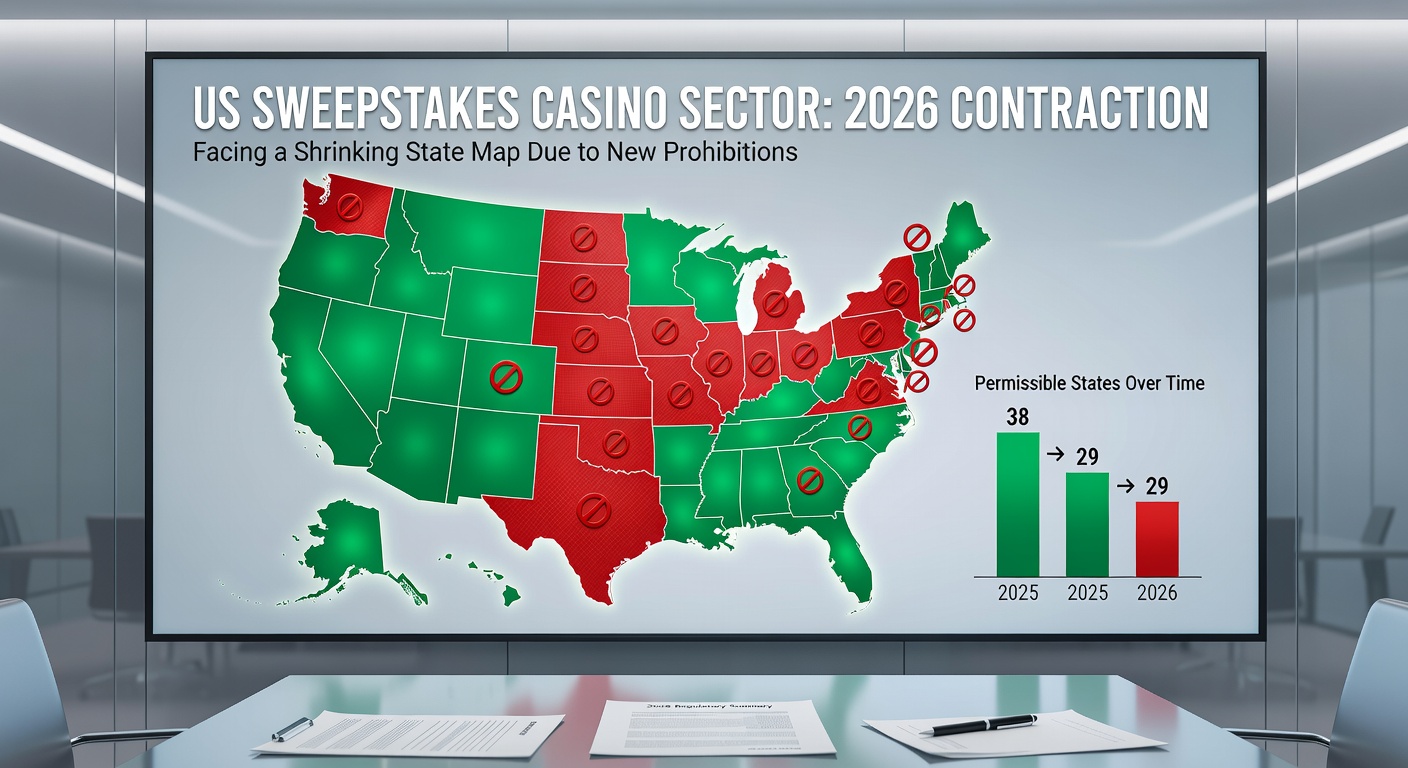
The US sweepstakes casino sector entered 2026 with significant adjustments as new state prohibitions took hold, and operators responded by exiting certain markets while developing alternative products. California’s Assembly Bill 831 went into effect on January 1 2026 and removed an estimated one-fifth of national revenue from the sector, while Indiana’s House Bill 1052 followed with its own effective date of July 1 2026; these measures altered the available map for sweepstakes-based platforms that had previously operated across dozens of states.
California Legislation Takes Effect
Assembly Bill 831 targeted sweepstakes casino mechanics that combine free and paid currency systems, and the law’s implementation forced platforms to reassess their presence in the state. Data from industry tracking showed that California had accounted for roughly 20 percent of total sweepstakes revenue before the ban, so its removal created immediate revenue gaps for multiple operators. Companies tracked player activity and compliance requirements through early 2026, and several chose to suspend services rather than risk litigation. Observers note that the legislation built on earlier enforcement actions, and by May 2026 the effects had already rippled through marketing budgets and payment processing agreements tied to California users.
Indiana Prepares for July Implementation
House Bill 1052 mirrored elements of the California approach yet carried its own enforcement timeline, giving operators until July 1 2026 to wind down operations or modify offerings within the state. Indiana regulators coordinated with payment processors to monitor transactions that involved sweepstakes promotions, and companies began segmenting user databases accordingly. The staggered effective dates allowed some firms to prioritize California exits first while still preparing Indiana compliance teams. Figures from state legislative summaries indicated that Indiana represented a smaller but still meaningful share of national sweepstakes activity, particularly among users who engaged with social casino-style games on mobile devices.
Operator Strategies Shift in Response
Virtual Gaming Worlds, the parent company behind Chumba Casino and similar platforms, announced exits from both states and introduced new brands that avoided dual-currency mechanics altogether. Just Slots emerged as one example of a product built without the traditional gold coin and sweepstakes coin structure, focusing instead on single-currency play that sidestepped the prohibited model. Marketing teams redirected advertising spend toward states that remained open, and they adjusted creative assets to emphasize skill-based or free-play elements where regulations permitted. Payment rails also underwent review, with operators exploring alternative processors that could handle cross-state compliance more reliably amid ongoing litigation risks.
Other operators followed similar patterns, and several launched regional variants that complied with remaining state rules while testing new user acquisition channels. Research from gaming industry reports shows that companies invested in compliance software capable of geofencing and real-time regulatory updates, which reduced exposure once the California prohibition activated. Those who studied earlier sweepstakes cases observed that litigation often centered on whether promotional entries constituted illegal consideration, prompting firms to strengthen terms of service and entry mechanisms in advance of the 2026 deadlines.
Market Contraction and Adaptation Patterns
The combined effect of the two bans produced a visibly smaller operating footprint for sweepstakes casinos by mid-2026, and analysts tracked a measurable drop in active user accounts tied to the restricted states. Operators that remained active consolidated resources around compliant products and explored partnerships with payment providers experienced in multi-jurisdictional environments. Data indicates that marketing campaigns shifted emphasis toward loyalty features and community events rather than broad acquisition pushes that might cross prohibited borders. In May 2026, several platforms reported stabilized user metrics in open states after initial disruption, although overall national revenue figures reflected the loss of the California market share.
Payment adaptation included new verification layers and segmented processing that isolated transactions from banned jurisdictions. Companies also reviewed affiliate agreements to ensure partners did not inadvertently promote services in California or Indiana after the respective effective dates. Industry organizations documented these changes through regular compliance briefings, and operators exchanged best practices on maintaining user engagement without dual-currency structures.
Conclusion
The 2026 prohibitions in California and Indiana prompted measurable operational shifts across the sweepstakes casino sector, with companies exiting markets, releasing single-currency titles such as Just Slots, and refining payment and marketing approaches under continued regulatory scrutiny. As of May 2026 the sector operated within a reduced state map while adapting products to align with remaining jurisdictions. According to legislative records from California’s legislative portal and summaries prepared by the American Gaming Association, these developments marked a clear contraction phase for platforms that had relied on sweepstakes mechanics nationwide.