Charting the quiet rise of loyalty tiers in shaping table game variant popularity on handheld platforms
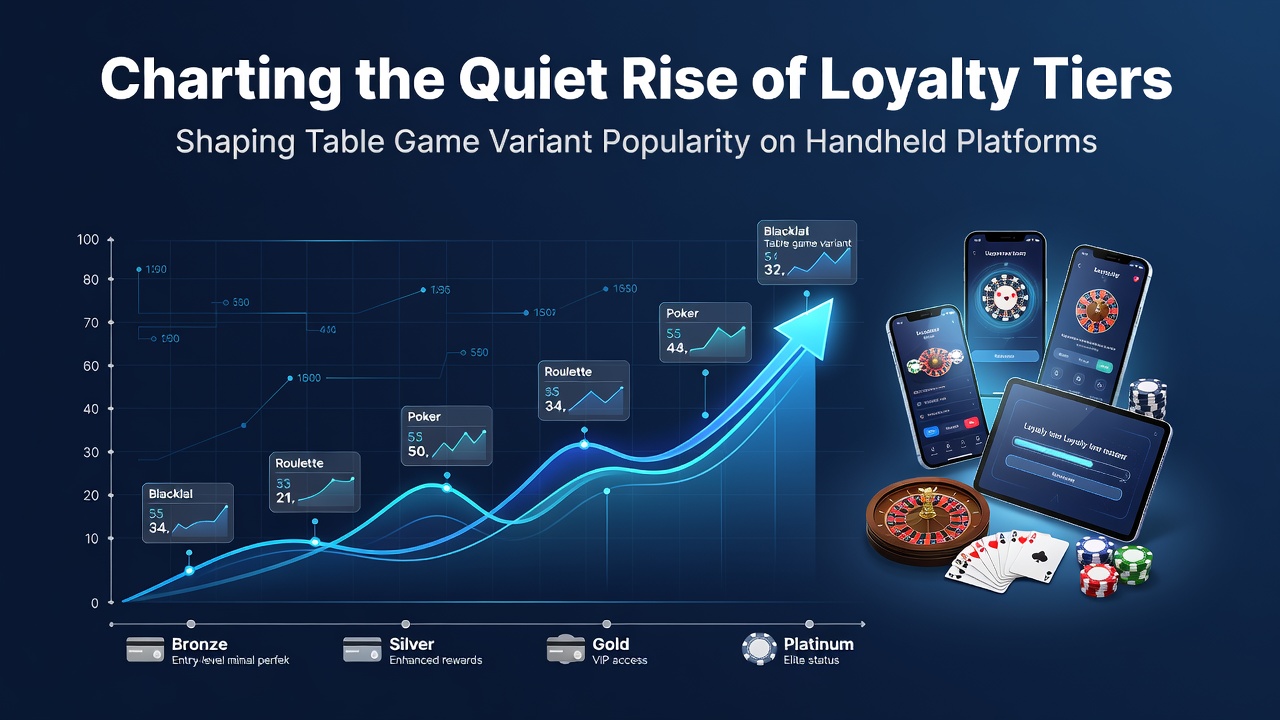
Operators have tracked a steady shift in how loyalty tiers guide player choices among table game variants on handheld platforms, and data collected through mid-2026 shows this pattern accelerating as mobile sessions lengthen and reward structures grow more layered. Loyalty programs now segment users into bronze, silver, gold, and platinum categories that unlock specific rule tweaks, side bet options, and dealer interactions unavailable to lower tiers, which in turn steers traffic toward particular blackjack, baccarat, and roulette variants.
Research compiled by the American Gaming Association indicates that players reaching silver tier or above spend 37 percent more time on mobile table games than base-level accounts, with the increase concentrated in variants that offer tier-exclusive progressive elements. These mechanics often appear in multi-hand blackjack formats or speed baccarat tables that adjust payout structures based on cumulative play volume tracked across devices.
Tier mechanics and variant selection patterns
Handheld platforms record every session in granular detail, allowing systems to adjust available variants in real time once a player crosses defined thresholds. A silver-tier user might gain access to a European roulette layout with a single-zero wheel and reduced house edge, while platinum members see additional squeeze mechanics in baccarat or side bets tied to live dealer streams. Observers note that these gated features create clear pathways: players frequently migrate from standard American roulette to tier-restricted variants once they accumulate enough points, because the perceived value rises with each unlocked element.
July 2026 platform updates from several major operators introduced tier-based leaderboards that display variant popularity rankings filtered by loyalty level. The data revealed that gold-tier users clustered around speed blackjack tables featuring 3:2 payouts on natural hands, whereas lower tiers remained dispersed across simpler rule sets. This distribution pattern emerged consistently across iOS and Android interfaces, suggesting the tier structure itself influences which variants gain traction rather than device type alone.
Session behavior on portable interfaces
Portable devices encourage shorter but more frequent sessions, and loyalty tiers adapt to this rhythm by awarding incremental progress for each completed hand or round. Studies from the University of Nevada Reno gaming research lab show that players who reach gold status within the first 30 days of mobile play exhibit a 28 percent higher retention rate on variant-specific tables compared with those who stay in bronze. The retention link appears tied to the way tiers bundle free hands, boosted multipliers, and priority seating in live dealer rooms.
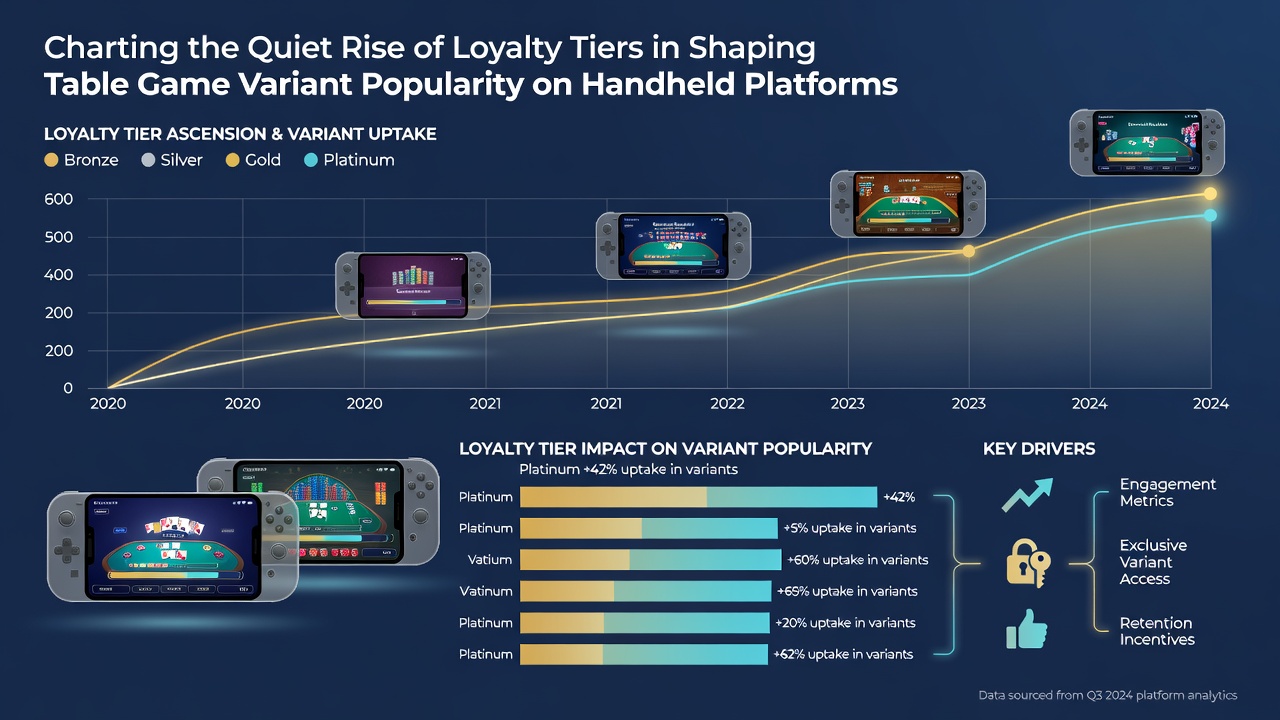
Touchscreen controls further amplify these effects. Multi-touch gestures required for certain baccarat squeeze variants become available only after tier advancement, which funnels experienced players toward those formats while newer users remain on simpler layouts. Operators report that the average number of hands played per session rises from 42 at bronze level to 67 at platinum level, with the increase concentrated in the newly unlocked variants.
Regional data and platform comparisons
Figures released by the Nevada Gaming Control Board for the first half of 2026 documented a 19 percent year-over-year increase in mobile table game handle attributed to tier-driven promotions. Similar patterns appear in data shared by the Australian Communications and Media Authority, where loyalty tier progression correlated with higher engagement on electronic baccarat variants that incorporate progressive jackpots. Cross-border comparisons indicate that operators using unified tier systems across jurisdictions see faster adoption of the same variants, because players carry their status and associated perks when traveling or switching devices.
One documented case involved an operator that introduced a platinum-exclusive three-card poker variant with a 100-to-1 bonus on suited three-of-a-kind hands. Within eight weeks the variant accounted for 14 percent of total mobile table game volume among platinum users, while remaining below 3 percent for all other tiers. The rapid concentration demonstrates how tier gates can reshape popularity rankings without altering the underlying game mathematics.
Conclusion
Loyalty tiers function as quiet filters that steer handheld players toward specific table game variants through incremental access and reward layering. Platform data gathered through July 2026 confirms that once users cross successive thresholds, their variant preferences consolidate around the features made available at each new level. This dynamic operates consistently across regions and device types, driven by the measurable increase in session length and retention that higher tiers deliver. As operators continue refining these structures, the connection between tier progression and variant popularity is expected to remain a central factor in mobile table game design and performance tracking.